The Bee (Danville, Virginia), Friday, 23 June 1933.
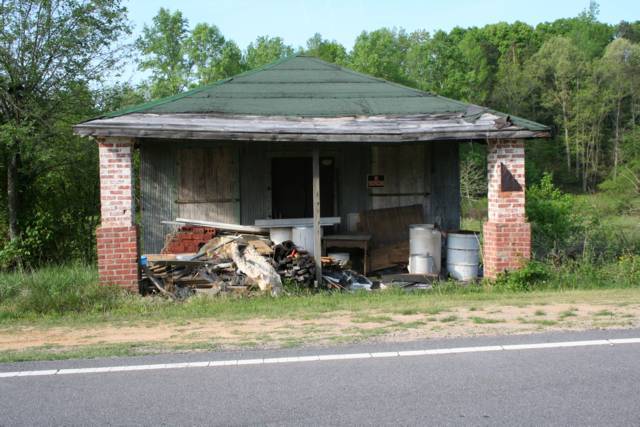
Old Highway 86 between Purley, Caswell County, North Carolina, and Danville, Virginia
Friday, July 01, 2016
Bartlett Yancey High School Public Speaking Club 1954
1954 Bartlett Yancey High School Public Speaking Club
Left to Right
Front Row: Dr. Holton, Camilla Sue Stuck, Janice Marie Powell, Eunice Lea Thompson, Mattie Jean Slaughter, Patsy Earp, Isabelle Crook.
Back Row: John Paschall Page, Dawson Emerson Scarborough, Jr., James Monroe Long III, Graham Allison Page, Leon Faidherbee Lyday III, Wilson Allen Slaughter, Jr., Norman Stroupe Upchurch.
Photograph courtesy The Caswell Messenger.
Wednesday, June 29, 2016
Caswell County Bicentennial: 1977
By Steve Smith, Staff Writer
Yanceyville -- M. Q. Plumblee, president of the Caswell County Historical Association, panned the jubilant throng of people gathered around the town square and said "I've never in my life seen this many people in Yanceyville at one time"
Yesterday, all activity came to a screeching halt and what seemingly was the entire population of Caswell County gathered at this Carolina crossroads of the mind to celebrate the county's Bicentennial, its 200th birthday.
With people of all ages observing the gala event, Johnny Reb, who stands foursquare on his granite pedestal in the middle of the town square, seemed to embody the spirit of the townspeople -- "Bring on the next 200 years."
The day-long celebration got underway with a 45-minute parade through downtown Yanceyville around Johnny's statue delighting the crowd of onlookers that lined the sidewalks from Bartlett Yancey High School where the parade began to the courthouse several blocks away.
Tuesday, June 28, 2016
Proclamation Money
In his 1777 Granville County will James Yancey (1704-1779), grandfather of Caswell County's Bartlett Yancey, Jr., included the following provision:
"Item 6 - I give unto my grand-daughter, Nancy Baynes, ten pounds proc. money."
What is "proc. money"?
_______________
Proclamation Money
To get around the shortage of money, colonial governments printed paper money, and colonists used whatever foreign currency they could get their hands on — Spanish dollars, for example. Today, global trading in currency sets exchange rates, but there were no international banks to set exchange rates in the 1700s. Instead, each colony set an official value in pounds, shillings, and pence on paper money and foreign coin. Because their value was set by proclamation, these currencies were called proclamation money.
People could also simply barter or trade goods back and forth. But someone who wanted to buy a bushel of corn, for example, might not have anything the seller wanted in trade. To get around this problem, certain commodities like tobacco were used as a kind of currency. Everyone would take tobacco in exchange for other goods, because it could be easily sold again. Barter made accounting difficult, though. To manage a plantation or business, people needed to keep track of their sales, purchases, and debts.
To make accounting possible, proclamation money also set a value on “rated commodities” that were commonly used as currency. These official prices meant that exchanges conducted in tobacco could be accounted in pounds, shillings, and pence. Turning commodities into “proclamation money” also enabled cash-poor colonists to pay their taxes in goods they had available to them.
Source: Walbert, David. "The Value of Money in Colonial America." Learn NC [http://www.learnnc.org/lp/editions/nchist-colonial/1646; accessed 17 June 2016].
_______________
A persistent lack of money prompted North Carolina and other colonies to print their own paper currencies and to rely on barter. In 1715 North Carolina's provincial government sanctioned a form of barter to sustain economic growth, approving the use of "the chief Produce of the Country" to pay public and private debts. Known as commodity money, this multitiered system had been used informally as early as 1694. In lieu of money, set quantities of tobacco, butter, tar, pitch, feathers, deer skins, beef, pork, whale oil, wheat, and other commodities could be used by citizens to pay their taxes and rents and to satisfy other expenses.
The North Carolina colony tried other means of increasing the supply of currency, or circulating medium. The legislature tried to increase the supply of coins, but North Carolina had no known supplies of gold or silver (until the discovery of gold near Charlotte in the 1830s), and Britain forbade the colonies to coin their own money. An available solution was to try to encourage the flow of coins into the province. As early as 1715, the North Carolina General Assembly declared the official value of British, Spanish, and other European silver and gold coins to be higher than their intrinsic bullion value in the hope that these coins would flow into the colony. This was not successful, however, since many British colonies were engaged in the same pursuit, and the British parliament subsequently made it illegal to rate coins at over one-third of their bullion value.
The most common and more successful solution, however, was the issue of fiat paper money, or "proclamation" money. Proclamation money was essentially a way of setting consistent values for the wide variety of currencies and commodities that served as money in the colony. To standardize this bewildering variety of currencies, the General Assembly would "proclaim" what the relative values of these kinds of money would be in North Carolina. In addition, proclamation money notes issued by North Carolina were essentially IOUs to cover the cost of necessary public works, such as fortifications. They were to be withdrawn from circulation when they were returned to the colony in payment of taxes, and the government would burn the bills they took in each year.
Source: deTreville, John R. and Fulghum, R. Neil. "Currency." NCPedia [http://ncpedia.org/currency; accessed 17 June 2016].
Thursday, June 23, 2016
Neal Watlington Honored by France
At the Levine Museum of the New South in Charlotte, North Carolina, French Consulate General Denis Barbet presented to Yanceyville's Neal Watlington and nine other WWII veterans France’s Legion of Honor medal. Initiated by Napoleon Bonaparte in 1802, it is the highest military honor France grants. To be eligible, a US veteran must have fought in one of the four main campaigns of the Liberation of France: Normandy, Provence, Ardennes, or Northern France. Only a few medals are awarded annually, and care is taken to select veterans with the most distinguished service records.
Before the awards ceremony, both the National and French Anthems were sung. Consulate General Barbet stated: “Each time, I can assure you that I was and I am deeply humbled and moved by the opportunity to meet those Veterans and express to them officially the eternal gratitude of the French for their brave service more than 70 years ago,” During the ceremony Mr. Barbet said the veterans also were knighted in France (which is part of the Medal of Honor procedure).
“I was so surprised,” said Neal Watlington. “It was so long since I was in the war.” Neal’s wife, Katherine, added: “It was a great honor and we are so appreciative.”
Neal entered the US Army May 10, 1943. On D-Day the unit he would join landed on Omaha Beach. He caught up to that unit in France on June 29, 1944. While in France he was assigned to the 69th Infantry, Company I, 60 MM Mortar Squad. Later, after being wounded by shrapnel, he was a jeep driver and machine gunner. Neal also fought in Germany and Belgium, including the Battle of the Bulge. Neal received the Purple Heart, Combat Infantrymen Badge, American Theatre Campaign Medal, Eastern Europe Campaign Medal(with four Bronze Service Stars), WWII Victory Medal, Driver and Mechanics Badge, and Good Conduct Medal. He departed France December 7, 1945, ending his military service December 21, 1945, when he was discharged at Fort Bragg, North Carolina.
After the War, Neal played professional baseball for several years. Later he and Katherine operated “Watlington’s On The Square” in Yanceyville for many years. His love of baseball did not end with his major league career. In Caswell County he promoted youth baseball, both as a coach and teacher of the game. Neal has wonderful memories of his baseball career, including meeting Babe Ruth in 1947.
Neal is a charter member (1946) of local Veterans of Foreign Wars Post 7316 in Yanceyville. Fred Smith, VFW Post 7316 Commander, submitted the application that resulted in Neal's award. Accompanying Neal Watlington at the ceremony were his wife Katherine, son Stuart (and his wife Linda), and Fred and Sallie Smith.
Source: The Caswell Messenger (Yanceyville, North Carolina), 22 June 2016. All rights reserved.
Richmond-Miles History Museum (Yanceyville, NC)
"Museum Looking for Artifacts"
By Angel Solomon (The Caswell Messenger, 22 June 2016)
Sallie Smith, President of the Caswell County Historical Association (CCHA), extends an invitation to visit the Richmond-Miles History Museum in Yanceyville. Sallie explained that the Museum was founded in the early 1980s by the CCHA and is operated by unpaid volunteers. Initially, the museum was housed in the historic Caswell County Courthouse. Later, using a generous donation from descendants of the Museum's namesakes (Richmond and Miles families), the current building on the Yanceyville Square was purchased and converted into today's Museum. That building, the Graves-Florance-Gatewood House, is itself historic.
Sallie Smith credited Sally Anderson (1915-2002) and husband Zeke Anderson (1914-2005) as being the first volunteer curators at the Museum. The Andersons lived in the Paul A. Haralson House (the "Clerk's House) just southeast of the Courthouse. Not only were they active in Museum matters, but they also helped increase CCHA membership and created the Genealogical Research Room at the Museum. And, for years Sallie Anderson edited the CCHA Newsletter.
Sallie Smith has been a member of the CCHA for many years. Since retiring from the Caswell County Finance Department three years ago (working in the Old Courthouse), she has been an active CCHA board member, now serving as CCHA President.
Sallie says that Paula Seamster (CCHA Treasurer) recruited her for the CCHA board. “I just followed her lead. And now I am very much involved. Which is a good thing, it keeps me busy. We have a lot of older folks in Caswell, and their stories just need to be told. We have a lot of history in Caswell.” Caswell County residents can share their stories by donating/lending memorabilia to the museum. “Any artifact or memorabilia that they can loan us or they can gift it to us as a permanent item for the museum. We have the African American room, the sports room, and the Maud Gatewood exhibit upstairs. We need anything from kitchen items to military items, and even things from now; in time they are going to be history. We can rotate items when we get more. We also could use donations of display cabinets and mannequins to show off these historical items.” Family histories always are welcome.
Monday, June 20, 2016
The Teaching Chandler Sisters
"A Family of Teachers"
"The eight Chandler sisters became teachers, and they really stuck to their vocation. The eight of them have a total of almost three centuries experience. From left to right are Mrs. Mary Nelson, Mrs. Jewell Nelson, Miss Lessie Chandler, Mrs. Alice Nelson, Mrs. Lillian Mabe, Mrs. Foy Williams, Miss Elizabeth Chandler and Mrs. Bessie Scott." (Staff Photo by Jim Sparks)
Source: "Durham Herald" (undated)
_______________
1. Lessie Vie Chandler (1896-1990)
2. Foy Willis Chandler Williams (1898-1992)
3. Alice Maude Chandler Nelson (1900-1982)
4. Mary Emma Chandler Nelson (1901-1992)
5. Lillian May Chandler Mabe (1903-2001)
6. Bessie Barbara Chandler Scott (1904-1992)
7. Jewel Nelson Chandler Nelson (1909-1991)
8. Elizabeth Clyde Chandler (1912-
Parents: Lewis Garner Chandler (1867-1945) and Mollie Frances Clark Chandler (1869-1944). Three Chandler sisters married three Nelson brothers; and one of these sisters had the middle name Nelson!
Two of the sisters have importance for Caswell County, North Carolina:
1. Lillian May Chandler married Coy Ephraim Mabe (1903-1998). Coy Mabe taught thirty-five years in the Caswell County school system. Lillian Chandler Mabe was a Caswell County teacher for twenty-five years. They were married in 1928, lived on a farm in Prospect Hill, and had two sons: Coy Ephiram Mabe, Jr., and Harrell Everette Mabe.
2. Bessie Barbara Chandler married George Lea Scott (1908-1962). Bessie Chandler was born in Mecklenburg County, Virginia (near Nelson, Virginia), moved to Semora, North Carolina, around 1928 and taught school for many years in the Murphey school system. The couple had three sons: George Lea Scott; John Howard Scott; and Herbert Lewis Scott.
To see larger versions of the above images, click on them.
Subscribe to:
Posts (Atom)


