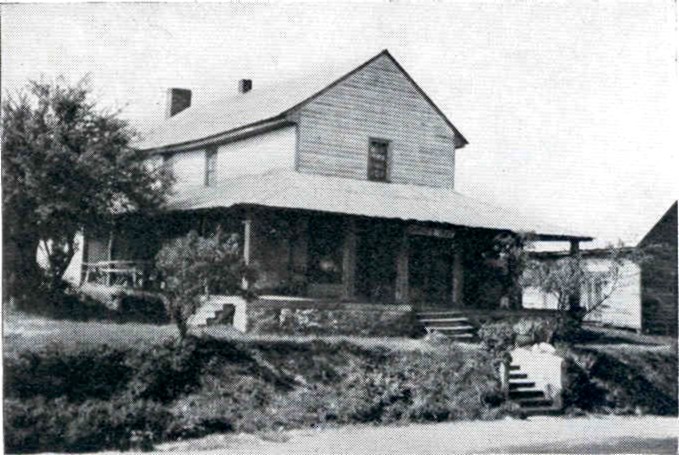
This item is posted because it refers to two Milton businesses. Note, however, the incorrect assertion that Milton, North Carolina, as of the early 1880s had never had a black business. The author appears unaware of the successful business of Thomas Day. Photograph: Milton Business District.
_______________
"Most historians agree that only a small share of southern blacks experienced economic gains in the fifty years following the Civil War. Little attention has been focused, however, on the minority who successfully acquired property and conducted business during this time. In Enterprising Southerners, Robert C. Kenzer examines the characteristics of North Carolina's African-American population in order to explain the social and political factors that shaped economic opportunity for this group from the Civil War until 1915."
"What is surprising, Kenzer asserts, is that his research does not support lingering theories that the "heritage of slavery" adversely affected blacks' performance in the market economy. Instead, he blames economic barriers to development, such as lack of capital and poorly developed markets. This study not only provides a valuable history of one state's black population, but also paves the way for similar scholarship in other southern states."--Jacket.
Tuesday, June 07, 2016
Roxboro Meeting of Confederates
On June 28, 1873, a public "Meeting of Confederates" was held at Roxboro, Person County, North Carolina. The purpose was to consider measures for preserving the record of Person County in the Civil War. The meeting was chaired by J. J. Lansdell, with John L. Harris and N. N. Tuck acting as secretaries. Five were appointed to a committee to report steps necessary to preserve the Person County Civil War records: H. T. Jordan (chairman), James Holeman, Jr., S. C. Barnett, James M. Burton, and Samuel A. Barnett.
Committee Chairman Jordan reported to the meeting:
"Whereas, we have learned with pleasure that the Sentinel newspaper published at Raleigh, and the Journal of Commerce newspaper published at Newbern, have determined to rescue as far as they may be able the record of North Carolina in the late war; and whereas, many soldiers went from Person county into the war and we are thereby enabled to contribute to the work of the Sentinel; and whereas, no battle was fought in this county, and we are thereby unable to contribute anything to the labors of the Journal of Commerce, except subscriptions to its list of patrons,
Resolved, That we heartily commend the purpose of both these useful and patriotic journals.
Resolved, That in furtherance of the plan of the Sentinel we appoint a committee of one in each school district to gather up, arrange and report all facts, names, &c, as called for by the plan of said newspaper, and that said report be made at the earliest day possible to the committee provided for in the next resolution.
Resolved, That a committee of seven be appointed to whom the district committees shall report, who shall aggregate, collect, arrange and write out in connected historical form the materials furnished by the sub-committees and prepare them for publication.
Saturday, June 04, 2016
North Carolina Railroad 1848/1849: "The Baptist Enigma"
The "Baptist Enigma"
A major issue before the North Carolina Legislature during the 1848/1849 term was funding the North Carolina Railroad. Some favored a north-south line, while others supported extending the railroad to Charlotte to open the western parts of North Carolina.
When the bill proposing the east-west route to Charlotte came before the North Carolina Senate, Caswell County's Calvin Graves was Speaker. Following is Senator Rufus Barringer's account of the episode, which effectively ended the political career of Calvin Graves as his constituents favored a north-south route that would pass through Caswell County (on to Danville and Richmond):
"The chances in the Senate were all in doubt. That body was Democratic; and up to this time, no special effort had been made to draw the old ship from its Jeffersonian moorings. And such men as Henry W. Conner, John H. Drake, A. B. Hawkins, John Berry, George Bower, W. D. Bethel, George W. Thompson, and John Walker were hard to lead and could not be driven. And above them all sat Speaker Calvin Graves, a recognized force from a county just under the nose of Danville, and devoted to Richmond. The speaker was tall, angular, and singularly ugly in feature; but his character was high; he was strictly impartial, and with all courtesy in bearing.
1835 North Carolina Constitutional Convention
Thomas Day Lost Right to Vote
On June 4, 1835, a convention called to modify the North Carolina Constitution of 1776 opened at the First Presbyterian Church in downtown Raleigh. A special election was held in April 1835 to select 130 delegates to attend the convention in Raleigh. The Caswell County delegates were William A. Lea and Calvin Graves (1804-1877). And, Caswell County's Major James Kerr (1788-1848) served as temporary president (chairman) of the convention until the delegates could select a permanent president (Nathaniel Macon of Warren County).
After about five weeks of debate and votes, a slate of constitutional amendments was adopted. The main changes made by the convention had to do with elections and who could hold certain offices. Under the new constitution, free African American men, who had previously been able to vote, were disenfranchised. Elections for the General Assembly shifted from being held annually to be held every other year, and the way each chamber's membership was apportioned changed. Balloting for governor shifted from the legislature to popular vote, the governor's term was extended from one to two years, and all Christians, not just Protestants, became eligible to hold public office.
North Carolina's state constitution would not be completely overhauled again until Reconstruction (1868).
William A. Lea and Calvin Graves voted with the majority (vote: 66 to 61) to take the right to vote from "free blacks, free people of color, and descendants of Native Americans."
William A. Lea has not been identified. One possibility is William Archer Lea (1786-1843), a wealthy Leasburg farmer (and slave owner).
Tuesday, May 31, 2016
Caswell County Stores
Aldridge Grocery/W&W Grocery (Yanceyville)
Aldridge Store (Anderson)
Anderson's Store (Quinton Anderson) (Anderson)
Allen Store/Garage #1 (Blanch)
Allen Store/Garage #2 (Blanch)
H. V. Clayton's Store (Ridgeville Road)
Leasburg Grocery Store (Leasburg)
Little Service Station (Yanceyville)
L. J. Martin/Dixon Store (Leasburg)
Covington's Store
Caswell County, North Carolina
General Dealers in Dry Goods, Groceries, Hardware, &c.
Anderson Quentin, Anderson's store.
Corbet & Warren, Prospect Hill.
Farrish G. J., Blackwell's store.
Graves Lawson & Co., Yanceyville.
Hawks Edward P., Milton.
Jones Yancey & Co.; Yanceyville.
Johnson & Neal, do.
Lea William & Son, Leasburg.
Neal Stephen & Co., Locust Hill.
Palmer & Vernon, Yanceyville.
Smith Geo. A. & Co., Milton.
Thompson Joseph S., Leasburg.
Watkins Samuel & Co., Yanceyville.
Winstead Daniel D., Hightowers.
Williamson & Baynes, Locust Hill.
Aldridge Grocery/W&W Grocery (Yanceyville)
Aldridge Store (Anderson)
Anderson's Store (Quinton Anderson) (Anderson)
Allen Store/Garage #1 (Blanch)
Allen Store/Garage #2 (Blanch)
Brann/Fleetwood Store (Semora)
Brincefield's Store (Camp Springs)
Brintle's Store (Pagetown)
H. V. Clayton's Store (Ridgeville Road)
Cobb's Store (Ashland Road at Bethesda Church Road)
Billy Cobb Store (US 158 at Park Springs Road)
S. B. (Buck) Coley's Store
H. T. Connally's Store (Leasburg) See image.
Billy Cobb Store (US 158 at Park Springs Road)
S. B. (Buck) Coley's Store
H. T. Connally's Store (Leasburg) See image.
Cook's Store
Corbett Store
Covington's Store (Covington Community, north of Yanceyville)*
Dabb's Store (Jericho)
Daniel-Gunn-Watkins Store
Red Daniel's Store
Dixon Store (Leasburg)
Duncan's Store (Pelham)
Everett's Store (Blanch) See image.
Fitch's Store (Anderson)
Jim Fitzgerald's Store (Pelham)
Chesley Firesheet's Store (Estelle)
Florance, Harrelson & Co. (Yanceyville)
Tom Florance's Store (Yanceyville)
Four Points Store (Leasburg)
C. J. Fowlkes Store (Providence)
Gatewood's Store (Park Springs)
Azariah Graves Store (Yanceyville)
Paul Gregory Store (Providence)
Gunn's Store
Azariah Graves Store (Yanceyville)
Paul Gregory Store (Providence)
Gunn's Store
Hall's Store (Camp Springs)
Hamer General Store (Hamer)
Hamlett's Store (Semora)
James B. Harrelson Store (Allison Road Near Hwy 158)
Lofton Harrelson Store (US 158 at Bethesda Church Road)
Hamer General Store (Hamer)
Hamlett's Store (Semora)
James B. Harrelson Store (Allison Road Near Hwy 158)
Lofton Harrelson Store (US 158 at Bethesda Church Road)
Walter N. Harrelson Store (Yanceyville)
Alvis Harris Store (Stoney Creek)
W. H. Hatchett Store (Allison)
Hinton's Store (Semora)
Luther Hodge's Store (Yanceyville)
Alvis Harris Store (Stoney Creek)
W. H. Hatchett Store (Allison)
Hinton's Store (Semora)
Luther Hodge's Store (Yanceyville)
George T. Hodges Store (Hodges Dairy Road)
James A. (Jimmy) Hodges Store (US 158 at Hodges Dairy Road)
W. H. Hooper & Son (Yanceyville)
Hudson's Store (Estelle)
James A. (Jimmy) Hodges Store (US 158 at Hodges Dairy Road)
W. H. Hooper & Son (Yanceyville)
Hudson's Store (Estelle)
Jones Store (Milton; Franklin B. Jones)
Jones and Lamberth Store (Cherry Grove Road)
Jerry Lea's Store (Stoney Creek)
Jones and Lamberth Store (Cherry Grove Road)
Jerry Lea's Store (Stoney Creek)
Brodie Kimbro's Store (Anderson Township; Highway 62S at Cherry Grove Road)
Leasburg Grocery Store (Leasburg)
Little Service Station (Yanceyville)
L. J. Martin/Dixon Store (Leasburg)
McCauley's Store ("Old Tony") (Anderson)
McSherry's Store (Semora)
T. L. Massey Store (Stoney Creek) (see photo above)
McSherry's Store (Semora)
T. L. Massey Store (Stoney Creek) (see photo above)
W. W. Miles Store (Cherry Grove)
Minor's Store (Cherry Grove)
Moore's Store (Pagetown)
W. R. Morgan's Store (Ridgeville Road)A. H. Motz (Yanceyville)
Pagetown Grocery (Pagetown)
Buster Payne's Store (Park's Spring Road)
J. M. Pleasant/W. D. Pleasant Store (Purley)
Poteat's Store (Camp Springs)
Price's Super Market (Yanceyville)
Buster Payne's Store (Park's Spring Road)
J. M. Pleasant/W. D. Pleasant Store (Purley)
Poteat's Store (Camp Springs)
Price's Super Market (Yanceyville)
Pryor's Store (Pelham)
Rascoe's Store (Anderson)
E. V. Rainey Store (Stoney Creek)
Rice's Store (Cherry Grove)
Ridgeville General Store (Ridgeville)
E. V. Rainey Store (Stoney Creek)
Rice's Store (Cherry Grove)
Ridgeville General Store (Ridgeville)
Saunders Store (Camps Spring)
P. E. Scism Store (Pelham)
Shaw Brothers' Store (Camp Springs)
Simmons Grocery (Highway 62 in Anderson)
Simpson's Store (Anderson)
Simmons Grocery (Highway 62 in Anderson)
Simpson's Store (Anderson)
G. Robert Smith Store (US 158 at Park Springs Road)
Smith's Store (Camp Springs)
Snead's Store
Onza Smith Store (Allison Road)**
Roy Somers Store (Milesville)
Onza Smith Store (Allison Road)**
Roy Somers Store (Milesville)
Paul Stanfield's Store
Square Deal Store (Covington/Purley area)
Stephens Grocery
Swann's Store
Swann's Store
Taylor's Store (Blanch/Milton)
Teague Store (Milesville Road)
Terrell Brothers' Store (Yanceyville)Thomas Store (Milton)
Teague Store (Milesville Road)
Terrell Brothers' Store (Yanceyville)Thomas Store (Milton)
Jule Turner Store (Stoney Creek)
G. W. Walker Store (Stoney Creek)
Walker's Store (Hightowers)
Walker's Store (Pagetown)Arthur Walker's Store (Stoney Creek)
Walker's Store (Hightowers)
Walker's Store (Pagetown)Arthur Walker's Store (Stoney Creek)
Daniel Watkins Store (Blanch)
O. B. Watlington's General Store (Yanceyville)
Watlington's Grocery Store (Yanceyville)
O. B. Watlington's General Store (Yanceyville)
Watlington's Grocery Store (Yanceyville)
Webster's Store (Prospect Hill)
West End Store (Yanceyville)
White Eagle Service Station
West End Store (Yanceyville)
White Eagle Service Station
Williams and McKinney Store (Pelham)
Nathan Williamson's Store
Willis Pure Oil Service Station (Prospect Hill)
Nathan Williamson's Store
Willis Pure Oil Service Station (Prospect Hill)
James Yancey's Store
Yanceyville Esso Station (Yanceyville)
Yanceyville Stores
Webb Yarbrough's Store (Locust Hill)
_______________
*This store may have been operated briefly by Robert Lee Covington (1899-1994) at the interesection of Melvin Wrenn Road and Old Highway 86 in the "Covington" community of Caswell County. Arthur Swann may have once operated his trucking business there, and the old concrete/stucco building may have been later used by the Yanceyville Explorer Scouts.
**Earlier, there was a larger store at Allison, for which the community was named. It stood near the junction with the Scott King Road.
_______________
Covington's Store
Jimmy's Store [need more information]
Fowlkes Store [need more information]
Snead's Store [need more information]
Square Deal Store
Store Beside Purley Methodist Church [need more information]
Store Between Purley and Farmer Road [need more information]
Swann Trucking Business (Melvin Wrenn Road and Old Highway 86)
W. D. Pleasant General Merchandise
_____
Query whether James Ansel White, Jr. (1923-2019) operated J. A. White Trucking Company from the location Arthur Swann abandoned when Swann moved his trucking business.
_____
Robert Lee Covington (1899-1994). See attached obituary. Danville Register & Bee (Danville, VA), 17 July 1994.
_______________Thomson's Mercantile and Professional Directory 1851-1852 (North Carolina)
General Dealers in Dry Goods, Groceries, Hardware, &c.
Anderson Quentin, Anderson's store.
Corbet & Warren, Prospect Hill.
Farrish G. J., Blackwell's store.
Graves Lawson & Co., Yanceyville.
Hawks Edward P., Milton.
Jones Yancey & Co.; Yanceyville.
Johnson & Neal, do.
Lea William & Son, Leasburg.
Neal Stephen & Co., Locust Hill.
Palmer & Vernon, Yanceyville.
Smith Geo. A. & Co., Milton.
Thompson Joseph S., Leasburg.
Watkins Samuel & Co., Yanceyville.
Winstead Daniel D., Hightowers.
Williamson & Baynes, Locust Hill.
Monday, May 30, 2016
Census Records
Census Records
Summaries of census records on subscription services such as Ancestry.com provide helpful information. However, the summary does not exhibit all the data captured by the census enumerator. Take a look at the actual record.
Example: The census summary does not show the amount of personal property owned. For southern records before the Civil War this item can be revealing. A southern farmer with a large amount shown as personal property in 1860 may have been, and probably was, a slave owner. While slave schedules also exist, they are spotty and not always reliable.
As many slaves took the surname of their owners, this could be helpful for African-Americans researching their roots.
Wednesday, May 11, 2016
Yanceyville, North Carolina, Medical Doctors
Yanceyville Medical Doctors (draft list):
1. Thomas Lea Gwynn (1928-
2. Houston Lafayette Gwynn (1896-1963)
3. Stephen Arnold Malloy (1872-1944)
4. William Oliver Spencer (1863-1938)*
5. James Scott Doak (1864-1892)
6. William Henry (Buck) Henderson (1828-1909)
7. Albert Gallatin Yancey (1817-1887)
8. Allen M. Gunn (1807-1884)
9. Preston Roan (1842-1882)
10. Nathaniel Moore Roan (1803-1879)
11. Bedford Brown, Jr. (1823-1897)**
12. John Edmunds Brown (1800-1846)
_______________
*Left Yanceyville around 1906.
**Practiced in Yanceyville until start of the Civil War.
*** Dr. Lancelot Johnston (1748-1832) is Caswell County's earliest known physician/surgeon, but he is associated with Locust Hill and not Yanceyville.
Subscribe to:
Posts (Atom)