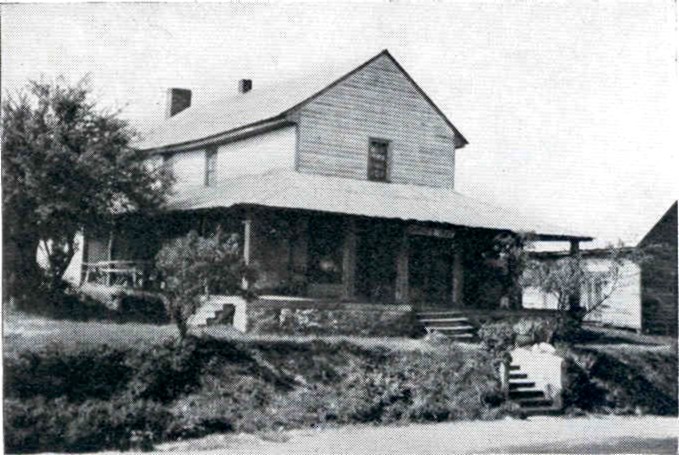
The "Baptist Enigma"
A major issue before the North Carolina Legislature during the 1848/1849 term was funding the North Carolina Railroad. Some favored a north-south line, while others supported extending the railroad to Charlotte to open the western parts of North Carolina.
When the bill proposing the east-west route to Charlotte came before the North Carolina Senate, Caswell County's Calvin Graves was Speaker. Following is Senator Rufus Barringer's account of the episode, which effectively ended the political career of Calvin Graves as his constituents favored a north-south route that would pass through Caswell County (on to Danville and Richmond):
"The chances in the Senate were all in doubt. That body was Democratic; and up to this time, no special effort had been made to draw the old ship from its Jeffersonian moorings. And such men as Henry W. Conner, John H. Drake, A. B. Hawkins, John Berry, George Bower, W. D. Bethel, George W. Thompson, and John Walker were hard to lead and could not be driven. And above them all sat Speaker Calvin Graves, a recognized force from a county just under the nose of Danville, and devoted to Richmond. The speaker was tall, angular, and singularly ugly in feature; but his character was high; he was strictly impartial, and with all courtesy in bearing.
Saturday, June 04, 2016
1835 North Carolina Constitutional Convention
Thomas Day Lost Right to Vote
On June 4, 1835, a convention called to modify the North Carolina Constitution of 1776 opened at the First Presbyterian Church in downtown Raleigh. A special election was held in April 1835 to select 130 delegates to attend the convention in Raleigh. The Caswell County delegates were William A. Lea and Calvin Graves (1804-1877). And, Caswell County's Major James Kerr (1788-1848) served as temporary president (chairman) of the convention until the delegates could select a permanent president (Nathaniel Macon of Warren County).
After about five weeks of debate and votes, a slate of constitutional amendments was adopted. The main changes made by the convention had to do with elections and who could hold certain offices. Under the new constitution, free African American men, who had previously been able to vote, were disenfranchised. Elections for the General Assembly shifted from being held annually to be held every other year, and the way each chamber's membership was apportioned changed. Balloting for governor shifted from the legislature to popular vote, the governor's term was extended from one to two years, and all Christians, not just Protestants, became eligible to hold public office.
North Carolina's state constitution would not be completely overhauled again until Reconstruction (1868).
William A. Lea and Calvin Graves voted with the majority (vote: 66 to 61) to take the right to vote from "free blacks, free people of color, and descendants of Native Americans."
William A. Lea has not been identified. One possibility is William Archer Lea (1786-1843), a wealthy Leasburg farmer (and slave owner).
Tuesday, May 31, 2016
Caswell County Stores
Aldridge Grocery/W&W Grocery (Yanceyville)
Aldridge Store (Anderson)
Anderson's Store (Quinton Anderson) (Anderson)
Allen Store/Garage #1 (Blanch)
Allen Store/Garage #2 (Blanch)
H. V. Clayton's Store (Ridgeville Road)
Leasburg Grocery Store (Leasburg)
Little Service Station (Yanceyville)
L. J. Martin/Dixon Store (Leasburg)
Covington's Store
Caswell County, North Carolina
General Dealers in Dry Goods, Groceries, Hardware, &c.
Anderson Quentin, Anderson's store.
Corbet & Warren, Prospect Hill.
Farrish G. J., Blackwell's store.
Graves Lawson & Co., Yanceyville.
Hawks Edward P., Milton.
Jones Yancey & Co.; Yanceyville.
Johnson & Neal, do.
Lea William & Son, Leasburg.
Neal Stephen & Co., Locust Hill.
Palmer & Vernon, Yanceyville.
Smith Geo. A. & Co., Milton.
Thompson Joseph S., Leasburg.
Watkins Samuel & Co., Yanceyville.
Winstead Daniel D., Hightowers.
Williamson & Baynes, Locust Hill.
Aldridge Grocery/W&W Grocery (Yanceyville)
Aldridge Store (Anderson)
Anderson's Store (Quinton Anderson) (Anderson)
Allen Store/Garage #1 (Blanch)
Allen Store/Garage #2 (Blanch)
Brann/Fleetwood Store (Semora)
Brincefield's Store (Camp Springs)
Brintle's Store (Pagetown)
H. V. Clayton's Store (Ridgeville Road)
Cobb's Store (Ashland Road at Bethesda Church Road)
Billy Cobb Store (US 158 at Park Springs Road)
S. B. (Buck) Coley's Store
H. T. Connally's Store (Leasburg) See image.
Billy Cobb Store (US 158 at Park Springs Road)
S. B. (Buck) Coley's Store
H. T. Connally's Store (Leasburg) See image.
Cook's Store
Corbett Store
Covington's Store (Covington Community, north of Yanceyville)*
Dabb's Store (Jericho)
Daniel-Gunn-Watkins Store
Red Daniel's Store
Dixon Store (Leasburg)
Duncan's Store (Pelham)
Everett's Store (Blanch) See image.
Fitch's Store (Anderson)
Jim Fitzgerald's Store (Pelham)
Chesley Firesheet's Store (Estelle)
Florance, Harrelson & Co. (Yanceyville)
Tom Florance's Store (Yanceyville)
Four Points Store (Leasburg)
C. J. Fowlkes Store (Providence)
Gatewood's Store (Park Springs)
Azariah Graves Store (Yanceyville)
Paul Gregory Store (Providence)
Gunn's Store
Azariah Graves Store (Yanceyville)
Paul Gregory Store (Providence)
Gunn's Store
Hall's Store (Camp Springs)
Hamer General Store (Hamer)
Hamlett's Store (Semora)
James B. Harrelson Store (Allison Road Near Hwy 158)
Lofton Harrelson Store (US 158 at Bethesda Church Road)
Hamer General Store (Hamer)
Hamlett's Store (Semora)
James B. Harrelson Store (Allison Road Near Hwy 158)
Lofton Harrelson Store (US 158 at Bethesda Church Road)
Walter N. Harrelson Store (Yanceyville)
Alvis Harris Store (Stoney Creek)
W. H. Hatchett Store (Allison)
Hinton's Store (Semora)
Luther Hodge's Store (Yanceyville)
Alvis Harris Store (Stoney Creek)
W. H. Hatchett Store (Allison)
Hinton's Store (Semora)
Luther Hodge's Store (Yanceyville)
George T. Hodges Store (Hodges Dairy Road)
James A. (Jimmy) Hodges Store (US 158 at Hodges Dairy Road)
W. H. Hooper & Son (Yanceyville)
Hudson's Store (Estelle)
James A. (Jimmy) Hodges Store (US 158 at Hodges Dairy Road)
W. H. Hooper & Son (Yanceyville)
Hudson's Store (Estelle)
Jones Store (Milton; Franklin B. Jones)
Jones and Lamberth Store (Cherry Grove Road)
Jerry Lea's Store (Stoney Creek)
Jones and Lamberth Store (Cherry Grove Road)
Jerry Lea's Store (Stoney Creek)
Brodie Kimbro's Store (Anderson Township; Highway 62S at Cherry Grove Road)
Leasburg Grocery Store (Leasburg)
Little Service Station (Yanceyville)
L. J. Martin/Dixon Store (Leasburg)
McCauley's Store ("Old Tony") (Anderson)
McSherry's Store (Semora)
T. L. Massey Store (Stoney Creek) (see photo above)
McSherry's Store (Semora)
T. L. Massey Store (Stoney Creek) (see photo above)
W. W. Miles Store (Cherry Grove)
Minor's Store (Cherry Grove)
Moore's Store (Pagetown)
W. R. Morgan's Store (Ridgeville Road)A. H. Motz (Yanceyville)
Pagetown Grocery (Pagetown)
Buster Payne's Store (Park's Spring Road)
J. M. Pleasant/W. D. Pleasant Store (Purley)
Poteat's Store (Camp Springs)
Price's Super Market (Yanceyville)
Buster Payne's Store (Park's Spring Road)
J. M. Pleasant/W. D. Pleasant Store (Purley)
Poteat's Store (Camp Springs)
Price's Super Market (Yanceyville)
Pryor's Store (Pelham)
Rascoe's Store (Anderson)
E. V. Rainey Store (Stoney Creek)
Rice's Store (Cherry Grove)
Ridgeville General Store (Ridgeville)
E. V. Rainey Store (Stoney Creek)
Rice's Store (Cherry Grove)
Ridgeville General Store (Ridgeville)
Saunders Store (Camps Spring)
P. E. Scism Store (Pelham)
Shaw Brothers' Store (Camp Springs)
Simmons Grocery (Highway 62 in Anderson)
Simpson's Store (Anderson)
Simmons Grocery (Highway 62 in Anderson)
Simpson's Store (Anderson)
G. Robert Smith Store (US 158 at Park Springs Road)
Smith's Store (Camp Springs)
Snead's Store
Onza Smith Store (Allison Road)**
Roy Somers Store (Milesville)
Onza Smith Store (Allison Road)**
Roy Somers Store (Milesville)
Paul Stanfield's Store
Square Deal Store (Covington/Purley area)
Stephens Grocery
Swann's Store
Swann's Store
Taylor's Store (Blanch/Milton)
Teague Store (Milesville Road)
Terrell Brothers' Store (Yanceyville)Thomas Store (Milton)
Teague Store (Milesville Road)
Terrell Brothers' Store (Yanceyville)Thomas Store (Milton)
Jule Turner Store (Stoney Creek)
G. W. Walker Store (Stoney Creek)
Walker's Store (Hightowers)
Walker's Store (Pagetown)Arthur Walker's Store (Stoney Creek)
Walker's Store (Hightowers)
Walker's Store (Pagetown)Arthur Walker's Store (Stoney Creek)
Daniel Watkins Store (Blanch)
O. B. Watlington's General Store (Yanceyville)
Watlington's Grocery Store (Yanceyville)
O. B. Watlington's General Store (Yanceyville)
Watlington's Grocery Store (Yanceyville)
Webster's Store (Prospect Hill)
West End Store (Yanceyville)
White Eagle Service Station
West End Store (Yanceyville)
White Eagle Service Station
Williams and McKinney Store (Pelham)
Nathan Williamson's Store
Willis Pure Oil Service Station (Prospect Hill)
Nathan Williamson's Store
Willis Pure Oil Service Station (Prospect Hill)
James Yancey's Store
Yanceyville Esso Station (Yanceyville)
Yanceyville Stores
Webb Yarbrough's Store (Locust Hill)
_______________
*This store may have been operated briefly by Robert Lee Covington (1899-1994) at the interesection of Melvin Wrenn Road and Old Highway 86 in the "Covington" community of Caswell County. Arthur Swann may have once operated his trucking business there, and the old concrete/stucco building may have been later used by the Yanceyville Explorer Scouts.
**Earlier, there was a larger store at Allison, for which the community was named. It stood near the junction with the Scott King Road.
_______________
Covington's Store
Jimmy's Store [need more information]
Fowlkes Store [need more information]
Snead's Store [need more information]
Square Deal Store
Store Beside Purley Methodist Church [need more information]
Store Between Purley and Farmer Road [need more information]
Swann Trucking Business (Melvin Wrenn Road and Old Highway 86)
W. D. Pleasant General Merchandise
_____
Query whether James Ansel White, Jr. (1923-2019) operated J. A. White Trucking Company from the location Arthur Swann abandoned when Swann moved his trucking business.
_____
Robert Lee Covington (1899-1994). See attached obituary. Danville Register & Bee (Danville, VA), 17 July 1994.
_______________Thomson's Mercantile and Professional Directory 1851-1852 (North Carolina)
General Dealers in Dry Goods, Groceries, Hardware, &c.
Anderson Quentin, Anderson's store.
Corbet & Warren, Prospect Hill.
Farrish G. J., Blackwell's store.
Graves Lawson & Co., Yanceyville.
Hawks Edward P., Milton.
Jones Yancey & Co.; Yanceyville.
Johnson & Neal, do.
Lea William & Son, Leasburg.
Neal Stephen & Co., Locust Hill.
Palmer & Vernon, Yanceyville.
Smith Geo. A. & Co., Milton.
Thompson Joseph S., Leasburg.
Watkins Samuel & Co., Yanceyville.
Winstead Daniel D., Hightowers.
Williamson & Baynes, Locust Hill.
Monday, May 30, 2016
Census Records
Census Records
Summaries of census records on subscription services such as Ancestry.com provide helpful information. However, the summary does not exhibit all the data captured by the census enumerator. Take a look at the actual record.
Example: The census summary does not show the amount of personal property owned. For southern records before the Civil War this item can be revealing. A southern farmer with a large amount shown as personal property in 1860 may have been, and probably was, a slave owner. While slave schedules also exist, they are spotty and not always reliable.
As many slaves took the surname of their owners, this could be helpful for African-Americans researching their roots.
Wednesday, May 11, 2016
Yanceyville, North Carolina, Medical Doctors
Yanceyville Medical Doctors (draft list):
1. Thomas Lea Gwynn (1928-
2. Houston Lafayette Gwynn (1896-1963)
3. Stephen Arnold Malloy (1872-1944)
4. William Oliver Spencer (1863-1938)*
5. James Scott Doak (1864-1892)
6. William Henry (Buck) Henderson (1828-1909)
7. Albert Gallatin Yancey (1817-1887)
8. Allen M. Gunn (1807-1884)
9. Preston Roan (1842-1882)
10. Nathaniel Moore Roan (1803-1879)
11. Bedford Brown, Jr. (1823-1897)**
12. John Edmunds Brown (1800-1846)
_______________
*Left Yanceyville around 1906.
**Practiced in Yanceyville until start of the Civil War.
*** Dr. Lancelot Johnston (1748-1832) is Caswell County's earliest known physician/surgeon, but he is associated with Locust Hill and not Yanceyville.
Friday, May 06, 2016
Caswell County Sheriff: Interesting Facts
Caswell County Sheriff Michael Welch was in office 2002-2018, thus becoming one of Caswell County's longest serving sheriffs (16 years).
1. However, which sheriff holds the record term of office?
2. Which sheriffs held the office more than once?
3. Which sheriff intended not to run for re-election but changed his mind due to personal circumstances?
4. Which sheriff lost his badge only to have it found years later?
5. Which sheriff is a grandson of Bartlett Yancey, Jr.?
6. Who was the first sheriff of Caswell County?
7. Who was Caswell County's first African-American Deputy Sheriff?
8. Who was Caswell County's first African-American Sheriff?
_______________
1. James Isaac Smith, Jr., is Caswell County's longest serving sheriff, holding office for some 24 years (1978-2002). In second place is John Henry Gunn, with two terms totaling 23 years.
2. Five held the office twice: David Shelton was the first. Then Jesse C. Griffith. Later, John Henry Gunn and John Yancey Gatewood traded the office back and forth for over 30 years (1920-1951). Note that Sheriff Jesse C. Griffith was arrested by Colonel George Kirk during the Kirk-Holden War.
3. It was John Henry Gunn who decided not to seek re-election but changed his mind when he learned that his pension was not available unless he reached retirement age while still in office. He ran again, and was re-elected, presumably with pension intact.
4. Lynn Banks Williamson lost his badge:
Sheriff Lynn Banks Williamson (1918-1987), Caswell County Sheriff 1953-1958. His badge was found by an operator of a Garrett Metal Detector, who returned the badge to the Williamson family (believed to have been lost by Sheriff Williamson while quail (bob white quail, of course) hunting).
5. The sheriff who is a grandson of Bartlett Yancey, Jr., is Thomas Pancoast Womack (1861-1916), who served 1891-1894. He lived in the Bartlett Yancey House and is buried in the Yancey Family Cemetery there. It was his widow that gave the land for the school in Yanceyville on the condition that it be named for Bartlett Yancey, Jr.
6. David Shelton was the first Caswell County Sheriff, first serving two years (1777-1779); and then another term 1780-1783.
"Oaths having been taken, the [June 1777] minutes tell us, 'Mr. John Lea was appointed to open Court which he did accordingly.' The justices who had recently qualified then ballotted for a clerk and William Moore was chosen. Soon afterwards David Shelton was appointed sheriff. The following day before the court both of these new county officers entered into bond. For Clerk Moore the securities for his bond in the amount of £1000 were David Shelton and Hugh Dobbins, Jr. For Sheriff Shelton they were William Lea, William Moore, Hugh Dobbins, Jr., Adam Saunders, John Lea, and Matthew Jouett, and his bond, a little later, was set at £5,000."
7. James Edward Gwynn (1919-1980) was appointed a Caswell County Deputy Sheriff in 1966 (by Sheriff Bobby Poteat), and is believed to be the first African-American to serve in that capacity.
8. In 2018, Tony Durden was elected Caswell County's first black Sheriff.
Wednesday, April 27, 2016
Thomas Jethro Brown Tobacco Warehouse
The following is from Cameron, J. D. A Sketch of the Tobacco Interests in North Carolina. Oxford (NC): W. A. Davis & Co., 1881.
Brown's Warehouse
In 1872, Mr. T. J. Brown was encouraged by the increasing cultivation of tobacco in this section to venture upon the enterprise of opening a warehouse in Winston, which he did in an old barn of small size, 30x40 feet. The sales were advertised to take place daily, but supplies were irregular and small, and sale days were few and far between. There was then only one plug factory in the place, whose yearly output was not more than twenty thousand pounds. The culture in the surrounding country was small, conducted in primitive methods, without the use of artificial fertilizers, and curing was effected by the air or the sun or by wood fires. The introduction of coal curing, and more recently of flues, has completely revolutionized the whole system, the result of which is the abundant production of fine yellow tobacco, as well as a very superior article of dark grades. The increase of production compelled an increase of accommodations, and Brown's warehouse is now a building 70x200, with full skylight and abundant convenience within and without. The sales take place daily during the season. The house is known under the name of T. J. Brown & Co., and is formed by Messrs. T. J. Brown, W. B. Carter and J. R. Pearce. Mr. R. D. Mosely is auctioneer and Mr. P. A. Wilson bookkeeper.
Mr. Brown reports that the condition of the growing crop is very superior, and greatly increased in quantity. Many new men have gone into the business this year, and older planters have enlarged their operations. In characterizing peculiarities, he describes the tobacco of Stokes County as remarkably rich and waxy. He estimates the sales of Winston for the current year at seven millions of pounds, of which home manufacturers take about one-half; the remainder is bought on orders for Canada, the Western cities, Baltimore, etc., some large houses in the latter city, such as Gail & Ax, obtaining a large proportion of their stock here.
Mr. Brown adds that when he embarked in business in 1872 there were no banks in Winston, and no facilities whatever to aid a struggling enterprise. All this is now changed, there being ample bank accommodations, and also the convenient addition of a revenue office. The growth of the town in size and in business is more marked within the past five years than at any previous period.
Subscribe to:
Posts (Atom)