Thursday, June 15, 2006

Blanche Post Office

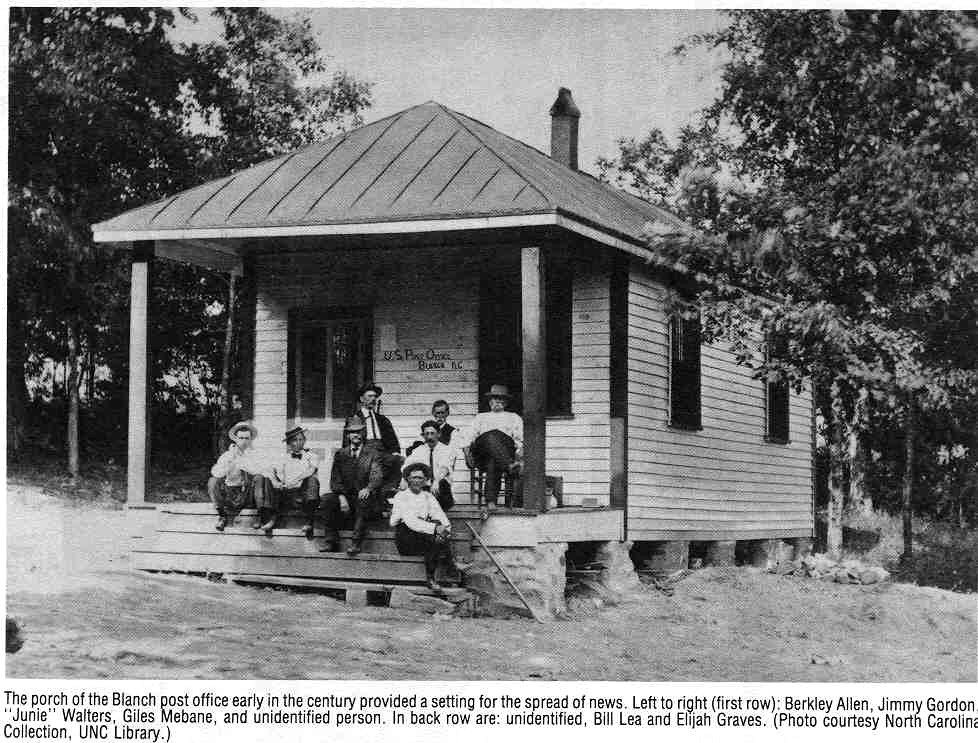
This photograph of the Blanch (Blanche) Post Office in Caswell County, North Carolina, is thought to have been taken just after the turn of the century (c. 1900). The men relaxing on the porch are identified as: Berkley Allen; Jimmy Gordon; Junie Walters; Giles Mebane; Bill Lea; and Elijah Graves.

See the earlier article on Blanche Lydia Moore for additional background information on this old post office, including how the Blanche community obtained its name. The post office is believed to date from 1887, so this could be the first building dedicated as the Blanche Post Office.

However, the purpose of this article is to explore the identities of the men on the porch.

Berkley Allen

Berkley Allen is Berkley Felix Allen (1895-1959). He owned and operated a country store and garage in Blanche. He purchased the store from his cousin, John Monroe Walters, and added the garage. The Allen name is of course well known in Blanche. The son of Berkley Felix Allen and Isma Vanhook married Katherine Wilkinson. For a great 1941 photograph of Felix and Katherine Allen at the Blanche Railroad Depot go to 1941 Photograph. To see a photograph of four generations (Eliza Kate Walters, Berkley Felix Allen, Felix Walters Allen, and Philip Walters Allen) go to Allen Family. The daughter of Berkley Felix Allen and Isma Vanhook, Martha Elizabeth Allen married Patrick Dowd Lassiter, another well-known Caswell County family.

Jimmy Gordon

Nothing is known about Jimmy Gordon. Can you help?

Friday, June 09, 2006

Walters Mill


Blanche Moore Wedding Invitation


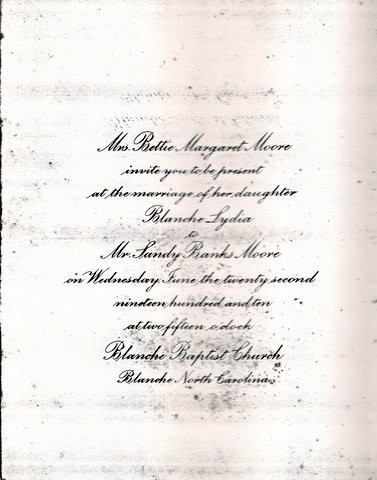
Here is a wonderful old wedding invitation submitted to the CCHA by a Caswellian who is very interested in the history of Blanche, North Carolina.

The wedding of Blanche Lydia Moore and Alexander (Sandy) Banks Moore did indeed take place at the Blanche Baptist Church on June 22, 1910.

Blanche Lydia Moore (1882-early 1960's) was the daughter of James Byrd Moore (1848-1900) and Bettie Margaret Powell (1851-1938). As James Byrd Moore had died, his wife was left alone to announce the wedding of their daughter in 1910. Note that Blanche Lydia did not need to change her surname.

Alexander Banks Moore (1879-1958) was known his entire life as Sandy. He was the son of Luther Thomas Moore (1852-1947) and Sarah Elizabeth Ferrell (1854-1892).

Blanche and Sandy Moore lived in the Blanche, North Carolina, community for many years before moving to Yanceyville, North Carolina. Their Blanche property was sold to Herman A. Smith and remains in the Smith family to this day. Blanche and Sandy had three children.

However, the community in which Sandy and Blanche first lived must have had another name (probably Rattlesnake). This is because the name was changed to Blanche, North Carolina, in honor of Blanche Lydia Moore. This name was bestowed either by Blanche's father (the first Blanche Postmaster) or by her uncle Daniel G. Watkins (the second Blanche Postmaster). Traditions differ on this.

Tuesday, June 06, 2006

Caswell County Jail


Caswell County Jail

One of the most interesting buildings in Caswell County is the old Caswell County Jail. Built in the first decade of the 1900's, the Jail served the county's prisoner housing needs until 1973, when a new jail was constructed.


After 1973, the old jail was used for a variety of short-term purposes, but by and large, the building stood unused, neglected, and empty. The ravages of time, weather, and lack of maintenance began to tell on the old structure, which soon developed symptoms of severe deterioration.

Newspaper Article: The Danville Register (Danville, Virginia) 19 December 1972. Click the article to see a larger version.

In 1985, the Caswell County Historical Association negotiated a 25-year lease on the building from the County Commissioners. The Bartlett Yancey Future Farmers of America Chapter was enlisted to renovate the structure, repair damage, and restore the building as near as possible to its original condition. One hundred and thirty members of the Chapter volunteered over 6,300 person-hours to the project, with donations of time, equipment, and materials by a number of Caswell County businesses and residents.

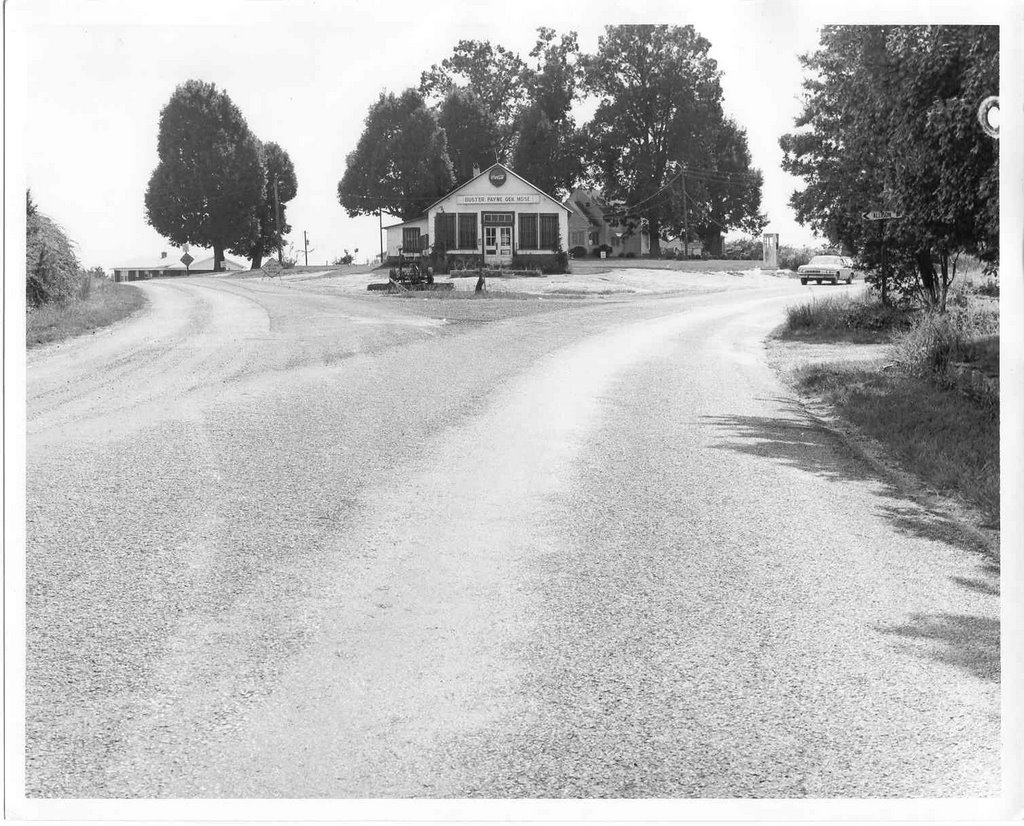
Buster Payne Store (?)


The CCHA Website has a section devoted to the old stores of Caswell County. The purpose of the series is to identify and document (hopefully with old photographs) the stores throughout the county that were so important to the commercial and social life of our ancestors (and many of us as well)!

Above is a store belived to be on the Park Spring Road.

Anyone know the history of this store?

Just add a comment here or email the CCHA.

Thanks.

Saturday, June 03, 2006

Yanceyville Square Scene

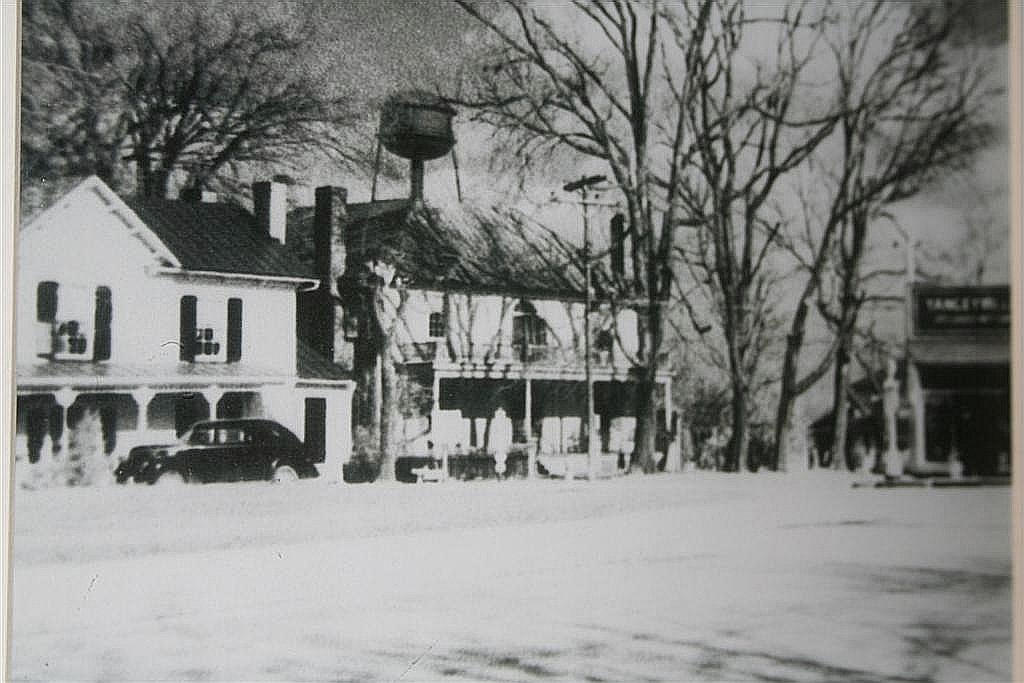
Here is a great old photograph of the house in which Maud Gatewood grew up (left) and the Poteat Hotel (center). To the far right is Yanceyville Motor Company, with a gasoline pump on the corner. In the background is the familiar Yanceyville water tower. Note: Click on the photograph for a larger image. You also may go to Square Photograph for a larger view.

Thursday, June 01, 2006

Another Milton Mill Site May Have Been Found

Historic Milton Mill Site

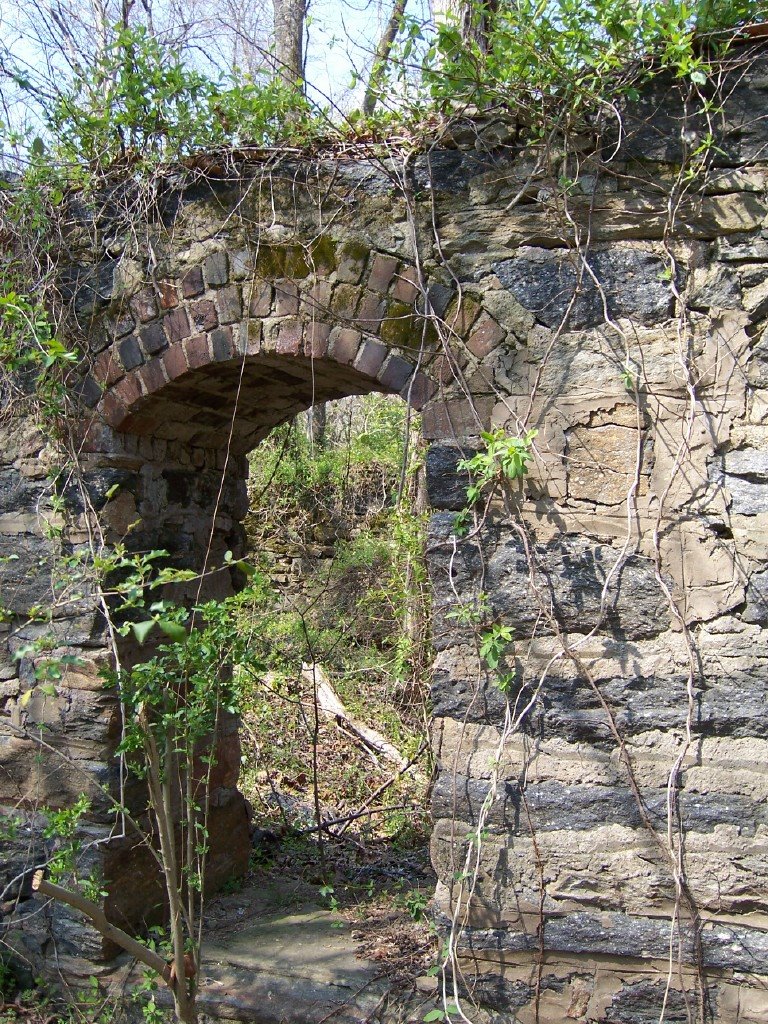
Two Caswellians with very deep Milton roots recently have been exploring the creek around Milton (Country Line Creek) searching for the ruins of the railroad and any mills that operated in the area. That the Thomas Mill once operated in Milton is well-documented. However, these investigators discovered on a 1940 map of Milton (copied from a 1840 map) a reference to another mill site that was located on Country Line Creek near the end of East Street in Milton.

These intrepid historians believe they may have located the site of this mill, which would be a separate mill from the better-known Thomas Mill. An archelogist from the University of North Carolina at Greensboro is interested in the discovery and plans to visit the site. Hopefully, she will be able to date the structure.

The accompanying photographs are of what was known as the Milton Roller Mill. Whether it is the same as the Thomas Mill is unknown.

Thomas Mill

One of the earliest references to the Thomas Mill is in a 1796 act of the North Carolina Legislature authorizing an inspection warehouse and the laying out of a town at the site of the warehouse. It was to be located near the mouth of the Country Line Creek at the Dan River on the property of Asa Thomas. Commissioners Thomas Jeffrey, Archibald Murphy, William Rainey, Archibald Samuel, and James Saunders were empowered to lay off thirty acres at or near the Thomas Mill into half acre lots and to establish a town to be named Milton. See When the Past Refused to Die: A History of Caswell County, North Carolina 1777-1977, William S. Powell (1977) at 100.

Powell goes on to observe that Asa Thomas had a mill at the site where the town of Milton was established before the town was formed, "but he soon was joined by others. Milton was indeed a mill town, as its name apparently was intended to suggest." Powell at 326.

It appears that the Thomas Mill had been in existence well before 1796. British General Cornwallis and his troops are believed to have "taken advantage of several mills such as Thomas's near Milton and Rainey's south of Semora." See The Tactical Rereat of General Nathanael Greene, Thomas J. Edmonds (2006) at 10.

And, it is possible that the mill that came to be known as the Thomas Mill was in operation as early as 1757. Note the following from Caswell County Historical Association Newsletter VOL. XXVI, Number 2, April 2003 at page 2:

"[Benjamin Merritt] came down from New York and secured a Granville Grant of many acres on both sides of the Dan River in two colonies. Benjamin built a mill which he sold to Mrs. Anne Smith ca.1757 with acreage over 50 in the tract, more than enough to start a flourishing frontier town."

And, the daughter of this Mrs. Anne Smith is believed to have sold this mill to William Thomas, Sr. in 1779. Asa Thomas was a son of William Thomas, Sr. For more on this go to the Will of Anne Smith, which indicates that she obtained her property in Milton by way of a Granville Land Grant in 1760.

For more background on the historic town go to Milton.

For additional photographs of the subject mill site go to Photgraph Two and Photograph Three.

The information provided here is for those interested in the history of Milton. However, please note that the structures shown reside on private property, and trespassers will not be tolerated.

Please submit any comments to the CCHA.